
Personal Blog • How-To
Posture for Desk Workers in Los Angeles: A Chiropractor’s Daily Playbook
Reading time: ~8–10 minutes • Designed for remote and office workers across LA
Posture isn’t a statue—it’s a behavior. In 37 years of practice and more than 500,000 patient visits, I’ve watched desk-bound Angelenos struggle with the same pattern: long static hours, fast deadlines, and “weekend warrior” bursts that the spine isn’t ready for. This playbook gives you a realistic posture system: how to set your workstation, how to build micro-breaks that don’t derail productivity, and which movements actually change how your neck, upper back, and low back feel by the end of the day. Use it as a flexible template—then adapt it to your body, your job, and your schedule.
The Big Idea: Posture Is Tolerances + Habits
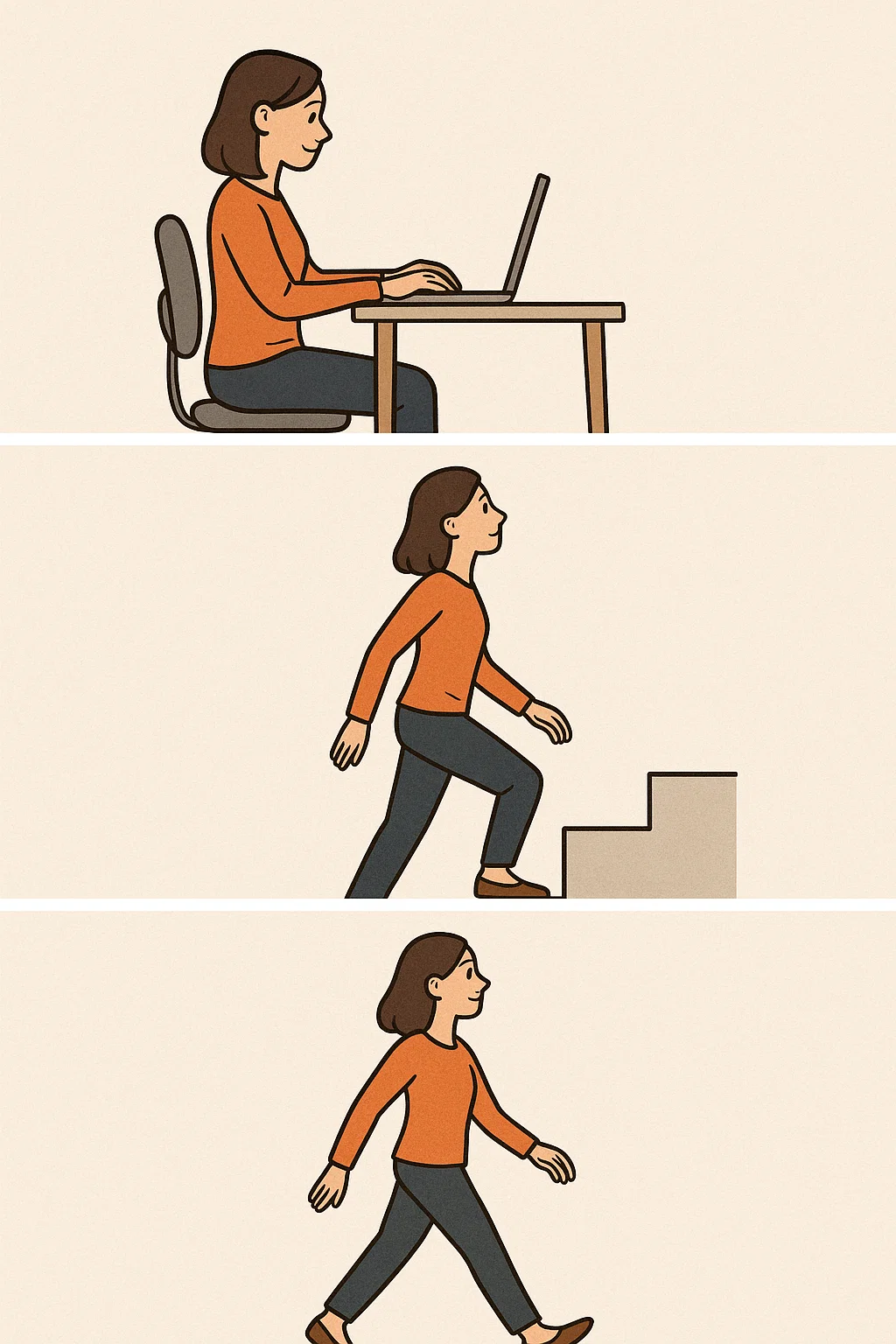
Your joints and soft tissues tolerate positions up to a point; discomfort arrives when time-in-position exceeds your current capacity. The solution isn’t one “perfect” posture— it’s rotating through a few strong options and sprinkling in movement. Think: change the shape, then change the load.
Workstation Essentials (10-Minute Setup)
- Screen height: Top third at eye level. If you use a laptop, add a riser and a separate keyboard/mouse.
- Chair: Hips slightly above knees; add a small towel roll at the belt line if you tend to slump.
- Keyboard & mouse: Elbows near 90°, shoulders relaxed, wrists neutral—not cocked up.
- Feet: Flat on the floor or on a footrest; legs uncrossed to keep the pelvis square.
- Lighting: Reduce glare so you’re not craning toward the screen to read fine contrast.
Reality check: Many LA workers split time between home, office, and cafés. Keep a “go kit” (mini mouse, folding stand, tiny towel roll) so you can reproduce a decent setup anywhere.
The 25/5 Rhythm (Minimal Disruption, Maximum Payoff)
Set a timer for 25-minute work blocks followed by a 5-minute micro-break. If five minutes feels impossible, take 60–90 seconds to stand, breathe, and reset your shoulder blades—and stack a longer break after your next meeting. Consistency beats hero breaks.
- Micro-break menu: 10 slow shoulder rolls; 10 chin tucks; stand and reach arms overhead; two “doorway” chest stretches; 30 seconds of marching in place.
- Commute cue: At red lights, perform 1–2 gentle chin tucks and two slow neck rotations—tiny, pain-free range.
Three Movement Blocks (Pick One Per Break)
Block A: Neck & Upper Back (2–4 minutes)
- Chin Tucks: Glide straight back (not down), 8–10 reps. Avoid jaw clenching.
- Wall Angels: Back to wall, ribs down, slide arms up; 6–8 slow reps.
- Thoracic Extension Over Chair: Lean upper back over chair top; 8–10 smooth reps.
Block B: Hips & Low Back (2–4 minutes)
- Hip Flexor Lunge Stretch: Tailbone slightly tucked; 30–45 seconds each side.
- Seated Figure-4: Ankle on knee; hinge from hips; 20–30 seconds each side.
- Standing Back Extensions: Hands on hips, gentle press forward; 8–10 reps.
Block C: Core Control (2–4 minutes)
- Dead Bug (floor or bed): Opposite arm/leg, 6–8 reps each side with slow breathing.
- Glute Bridge: 2 sets of 8–10, 2-second pause at top; ribs down.
- Pallof Press (band): 8–10 reps each side to train anti-rotation.
Phone & Laptop Rules (Save Your Neck)
- Phone: Bring it to eye level; elbows anchored to ribs. If your elbows float, your head is likely dropping forward.
- Laptop: Short sessions are fine at coffee-table height; longer sessions need a riser and peripherals.
- Texts & DMs: Use voice-to-text for longer replies to reduce thumb and neck strain.
End-of-Day Reset (6–8 Minutes)
- Breathing: 4 cycles box breathing to downshift the nervous system.
- Open the front: 2× 30-second doorway chest stretch.
- Hips: 90/90 hip rotations, 8 slow transitions.
- Spine: Cat–Cow x 8–10; finish with a 30–60 second child’s pose.
From Dr. Edward Komberg: “Don’t chase perfect posture. Chase posture options. Rotate between a few good shapes, and sprinkle movement all day. That’s how you win the desk game.”
When to Get Evaluated
If you notice persistent numbness, weakness, night pain, or headaches that intensify, get assessed. Good chiropractic care includes history, movement testing, and clear communication about plan and progress markers. Collaboration with your primary care or physical therapist is common when red flags or stubborn symptoms appear.