
Sciatica—leg pain, tingling, or numbness that can shoot below the knee—can sideline work, training, and everyday life. The term describes symptoms, not a single diagnosis: disc irritation, joint restriction, muscle spasm, or nerve entrapment can all mimic “sciatica.” Here’s what a chiropractic plan looks like in my LA practice: the exam, early relief steps, safe progressions, and realistic timelines. This is not a substitute for medical care; if you have red-flag symptoms like new weakness or bowel/bladder changes, seek emergency evaluation.
The Exam: Sorting the “Why” Behind Your Symptoms
- History: Onset, aggravators (sitting, coughing), relievers (walking, lying), prior episodes, gym/work demands.
- Movement: Flexion/extension bias, directional preference, gait, and hip control.
- Neurologic screen: Reflexes, strength, sensation when warranted.
- Orthopedic tests: Straight-leg raise, slump test, hip rotation screens, sacroiliac provocation tests.
Imaging is case-by-case. We order it when history/exam points to red flags or when symptoms don’t behave as expected across a short trial of care.
Early Relief: Calm the Irritated Tissue
- Positioning: Many patients prefer gentle extension (lying prone on elbows) or positional unloading (knees-up on pillows). We test, not guess.
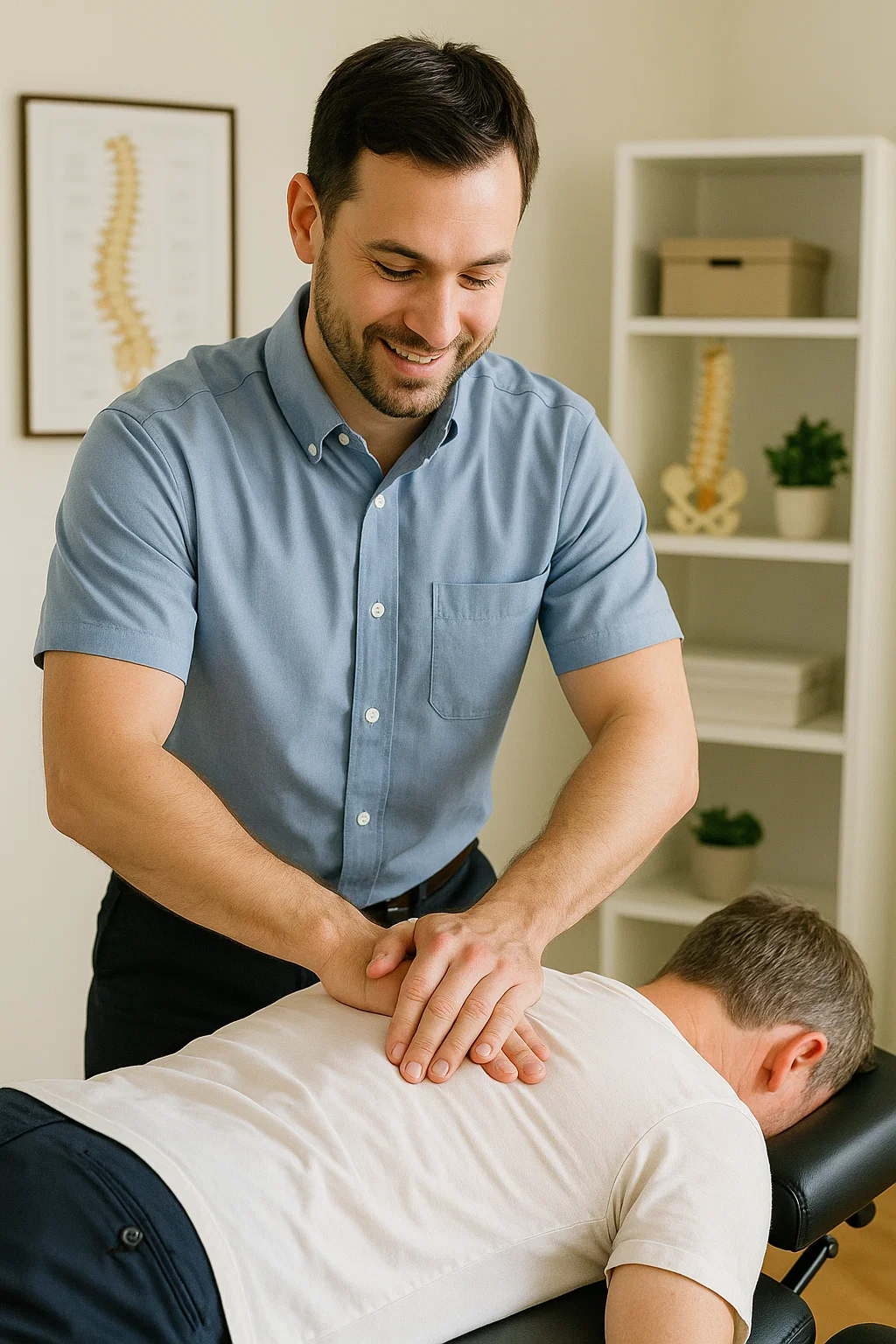
- Manual care: Gentle mobilization/adjustment to restore segmental motion; soft tissue work to reduce guarding.
- Micro-moves: Pain-free hip hinges, short walks, or nerve-glides (when appropriate).
Progressions: From Less Pain to More Life
- Stability first: Core “bracing” you can breathe through; glute bridges; bird-dogs.
- Hip strategy: Teach hips to carry more load: hinge pattern, split-stance balance, controlled step-ups.
- Capacity: Build tolerance for what flares you—sitting intervals, lifting form, or return-to-run walk-jogs.
Realistic Timelines
- Acute (days–weeks): Many improve meaningfully in 2–6 visits with home positioning and short walks.
- Recurrent: We focus on triggers (long drives, deconditioned hips) and build a maintenance plan—less frequent care with targeted exercises.
- Persistent: If progress stalls, we collaborate with your MD or PT for imaging, medication, or co-management.
From Dr. Edward Komberg: “Sciatica is a pattern, not a destiny. When we identify your directional preference and strengthen the right links—hips and core—flare-ups get shorter and rarer.”
Home Strategies That Matter in LA
- Driving: Seat a bit higher, hips slightly above knees, lumbar support with a towel, and planned stand-and-walk breaks.
- Desk: 25/5 rule—25 minutes work, 5 minutes movement; keep feet flat and monitor eye-level.
- Sleep: Side-lying with a pillow between knees or supine with pillows beneath knees to reduce tension.
When to Seek Immediate Care
New or worsening weakness, foot drop, saddle anesthesia, bowel/bladder changes, unrelenting night pain, or fever with back pain require urgent medical evaluation.